Britain's Democratic Deficit
Why Britain's constitutional settlement cannot reform itself - and what that means for our future.
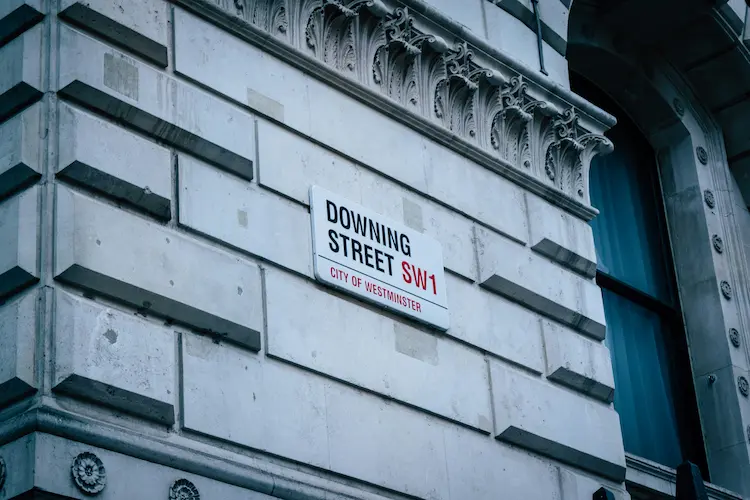
Britain's constitutional arrangements are often defended on grounds of tradition and stability. Yet recent years have exposed a system incapable of responding to crisis, resistant to reform, and structurally insulated from democratic pressure. The question is no longer whether Britain has a democratic deficit. The question is whether that deficit can ever be addressed from within.
A System Under Stress
Consider Britain's recent crises: Brexit, Covid, illegal migration. Each exposed serious institutional failures. Each generated public demand for reform. Each revealed a political system seemingly incapable of the adaptation that crisis normally produces.
Brexit was sold as "taking back control" - but control to whom? The answer was Parliament. The same unreformed Parliament, with the same unelected upper house, the same electoral distortions, the same concentration of power in the executive. The leave vote represented a popular demand for democratic renewal. The system absorbed that demand and neutralised it. Britain took back control from Brussels only to deposit it in an equally unaccountable Westminster - but not before the issue remained paralysed in Parliament for years, as MPs proved incapable of enacting any will other than their own.
The pattern has repeated. The small boats crisis persists despite overwhelming public concern. Legal and constitutional obstacles are cited, yet the reforms required to address them never materialise. Foreign criminals cannot be deported due to asylum claims and human rights obligations, yet the legal framework that prevents their removal remains unchanged. The grooming gang scandals revealed institutional failures across policing, social services, and local government, yet investigations remain incomplete and accountability absent. Each crisis illuminates insufficiencies. None produces the reform that democratic responsiveness should deliver.
The Sovereignty Paradox
In Britain, Parliament is sovereign. There are no legal limits on what it can do - any law can pass by simple majority. This should make Britain supremely adaptable, able to respond to any challenge without constitutional constraint.
Yet parliamentary sovereignty has produced paralysis, not flexibility. The concentration of theoretical power has created a system where that power is never exercised for fundamental change. Parliament can do anything - and therefore does nothing that would disturb the interests of those who operate it. The flexibility serves the political class, not the public.
"Britain's system can theoretically do anything - which is precisely why it does nothing. The absence of constitutional constraint has become the ultimate protection for institutional failure."
The Self-Protecting System
The specific deficits are well documented. Over 800 unelected Lords - reform discussed for a century, never enacted because it requires the Lords' consent. An electoral system producing 56% of seats from 43% of votes - reform never seriously considered because it threatens incumbent MPs. No codified constitution - because Parliament will never vote to constrain itself.
Each reform requires approval from those who benefit from its absence. The gatekeepers of change are its principal opponents. In a healthy democracy, institutional failure produces reform. In Britain, it produces obfuscation and pantomime with no democratic recourse.
Competing Power Centres
The American system is not without flaws - the Electoral College, gerrymandering, money in politics all face legitimate criticism. The crucial difference is structural: the US creates competing power centres that can force reform on each other. When Congress deadlocks, states move independently. When the executive overreaches, courts strike it down. When agencies fail, state attorneys general sue. Elected officials answer to different constituencies - a congressman can defy party leadership because they answer to their district, not the whip.
Consider how a scandal like the grooming gangs might unfold under American federalism. State attorneys general prosecute. State legislatures pass laws. Elected sheriffs face recall if they fail to act. Federal civil rights investigations proceed independently. Multiple power centres compete to respond - failure by one creates opportunity for another.
In Britain, power flows one direction: upward to Westminster. Devolved governments can be overruled. Courts cannot strike down primary legislation. MPs who defy the whip face deselection. When the single point of authority fails, there is nowhere else to turn - because the institution that failed is the only one empowered to fix itself.
The Question We Cannot Ask
Britain faces a choice it seems incapable of articulating. The crises keep coming. The failures keep mounting. Yet the conversation about fundamental constitutional reform never begins - not because it has been considered and rejected, but because it cannot be asked within a system designed to prevent it being answered.
For the first time in a generation, a new political party may hold office by 2029. This should offer hope. Instead, it represents the gravest risk of all. The expectations placed upon any insurgent government will be immense - to reverse decades of decline, fix broken institutions, and restore national confidence. These expectations will be set against a constitutional settlement designed to prevent exactly this kind of change. The pressure may be enough to break any fledgling party.
And what awaits after that failure? The technocratic establishment, ready with its told-you-so, and a panicked rush back to the perceived safety of the European Union. Brussels will welcome Britain's return - not as a partner, but as a cautionary tale. The EU has become an elephant's graveyard where the great nations of Europe go to decline together, their sovereignty pooled, their futures managed, their ambitions quietly euthanised.
A system that cannot reform itself will eventually be reformed by events. The only question is whether Britain chooses its future - or whether, exhausted by failure, it surrenders that choice entirely.